Market statistics
- Total volume
- $4.2M
- 24h volume
- $389K
- Liquidity
- $224K
- Open interest
- $1.5M
Platform comparison
| Platform | YES odds | NO odds | Fee | KYC | Settlement | |
|---|---|---|---|---|---|---|
Polymarket (via PolyGram) Pick polygram.ink (preferred broker) |
42% | 58% | 0% (USDC on-chain) | No-KYC up to $1,500 | USDC, auto via UMA oracle | Live odds → |
Polymarket (direct) polymarket.com |
42% | 58% | 0% | Geo-blocked in US/UK/EU | USDC, on-chain | Live odds → |
Kalshi kalshi.com |
— | — | Up to 7% per trade | US-only, KYC required | USD | Live odds → |
Betfair Exchange betfair.com |
— | — | 2-5% commission | Full KYC from first trade | GBP / EUR | Live odds → |
Manifold Markets manifold.markets |
— | — | Play-money (mana) | None — play-money | Mana (no cash-out) | Live odds → |
Outcome snapshot
Current YES/NO probability from the live order book.
Market context
Shipping transit through the Strait of Hormuz remains constrained by regional tensions and Houthi attacks on vessels, with daily arrivals currently tracking well below the 60-call threshold required for market resolution. The 7-day moving average has fluctuated between 35 and 50 calls over recent months as insurers adjust coverage, some operators reroute via the Cape of Good Hope, and military escorts remain inconsistently deployed. No material change in attack frequency or geopolitical posture has emerged in the past 48 hours to suggest an imminent normalisation.
Historical precedent offers limited guidance: the 2022 Russia-Ukraine disruption saw Black Sea grain corridor transits recover within months once diplomatic channels opened, whilst the 2019 tanker attacks near Hormuz prompted a gradual return to baseline within weeks as naval presence increased. The current situation differs in that Houthi operations lack a clear off-ramp tied to specific negotiations, and regional actors have shown limited appetite for de-escalation. A 60-call average would represent roughly 30% above current levels—achievable only if attack incidents cease entirely and confidence in the corridor recovers swiftly.
Traders should monitor announcements from the International Maritime Organization regarding corridor safety assessments, any shifts in US or allied naval deployment schedules, and statements from major shipping insurers on premium adjustments. Reuters and Lloyd's List have reported sporadic attacks continuing into 2025; sustained periods without incidents would be the primary catalyst for the probability to shift materially. The 18-month settlement window provides time for diplomatic resolution, but the current 43% implied probability reflects genuine uncertainty about whether normalisation occurs by June 2026.
Wikipedia Context
-
 Strait of Hormuz
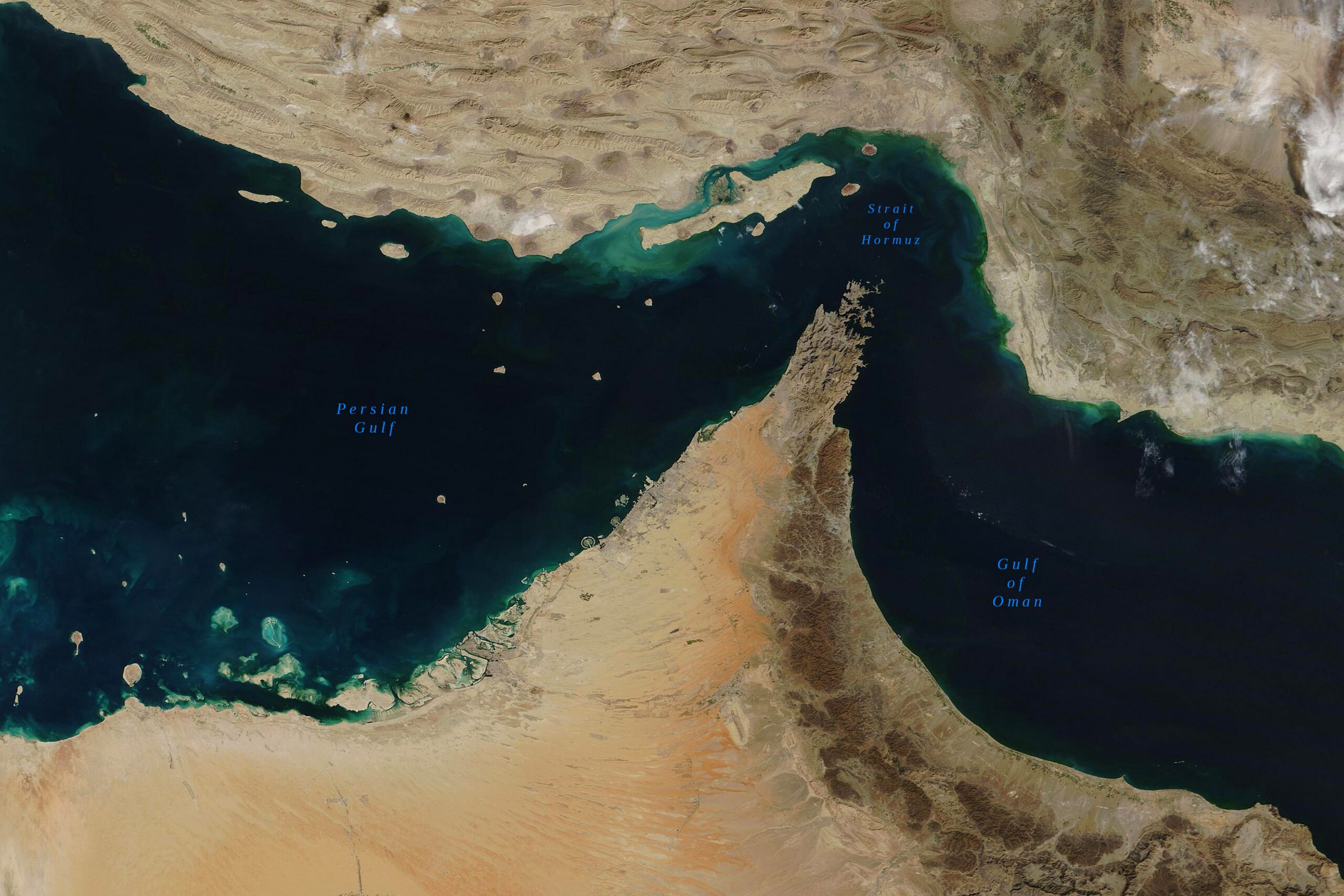
The Strait of Hormuz is a waterway between the Persian Gulf and the Gulf of Oman. On the north coast lies Iran, and on the south coast lies the Musandam Peninsula under the Musandam Governorate of Oman, with a portion of the southwest of the peninsula under the United Arab Emirates. The strait is about 104 miles long, with a width varying from about 60 mi to
-
 Battle of the Strait of Hormuz (1553)
The Battle of the Strait of Hormuz was fought in August 1553 between an Ottoman fleet, commanded by Admiral Murat Reis, against a Portuguese fleet of Dom Diogo de Noronha. The Turks were forced to retreat after clashing with the Portuguese.
-
 2026 Strait of Hormuz crisis
Shipping traffic through the Strait of Hormuz, a major maritime choke point for world energy trade, has been largely blocked by Iran since 28 February 2026, when the United States and Israel launched an air war against Iran and assassinated its supreme leader Ali Khamenei. In retaliation, Iran launched missile and drone attacks on Israel, US military bases,
Methodology
We track Strait of Hormuz traffic returns to normal by end of June? across the five venues with material prediction-market liquidity. The probability shown is the live Polymarket mid; the comparison rows summarise how each venue treats the underlying contract — fees, KYC thresholds, settlement currency, deposit options. The highlighted row marks the cheapest route into Polymarket's order book.
Resolution & payout
At resolution the UMA oracle takes over: a proposer posts the outcome with a bond, any token holder can dispute within two hours. Without dispute the result is accepted and the smart contract distributes USDC instantly.
On Kalshi (CFTC-regulated) resolution runs through their in-house clearing engine in USD. Betfair Exchange settles after match end in the account's local currency. Manifold pays no cash — only its in-platform "mana" currency.
FAQ
- Is this market available outside the US?
- Polymarket itself is geo-blocked in the US/UK/EU. Always check the legal status of prediction markets in your jurisdiction before trading.
- How does resolution work?
- Through the UMA Optimistic Oracle on Polygon: a proposer submits the outcome, a two-hour challenge window opens, and USDC payouts settle automatically once the result is final.
- What's the difference between YES and NO shares?
- A YES share pays $1.00 if the event happens, $0 otherwise. A NO share pays $1.00 if the event doesn't happen. The market price between 0¢ and 100¢ is the implied probability.
- Do I need to KYC for this market?
- On Polymarket directly, no — it's wallet-based. Intermediary brokers like PolyGram trigger KYC only above $1,500 of lifetime trading volume; under that you trade pseudonymously with a single wallet address.
- How reliable are the quoted odds?
- The YES/NO percentages are the live mid-prices of the Polymarket order book. On deep markets they move every few seconds; on thinner ones you'll see short plateaus.
Trade Strait of Hormuz traffic returns to normal by end of… on PolyGram
Live order book, 0% fees, USDC settlement in seconds.
Open live market →